
Bluetooth SIG and Wi-Fi Alliance team up on 6 GHz
Plus: a Mi Band 10 SoC hack, Auracast in venues, and ESPHome adds nRF52
This Week in Bluetooth & UWB |
June 26, 2026 |
|
In This Issue
→ Bluetooth/Wi-Fi 6 GHz coexistence
→ Mi Band 10 SoC reverse-engineered → Auracast for assistive listening → ESPHome adds nRF52 support |
BROUGHT TO YOU BY NORDIC SEMICONDUCTOR
|
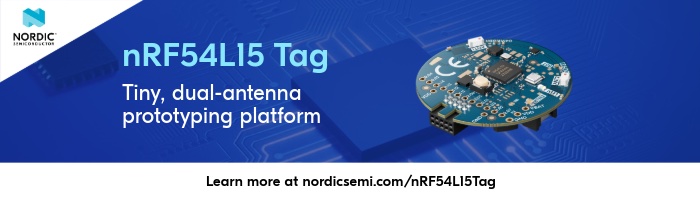
Nordic's new nRF54L15 Tag is a compact, dual-antenna prototyping platform for building ultra-low-power asset tags, Bluetooth trackers, and Apple Find My and Google Find Hub compatible products. The dual antennas add robustness for Bluetooth Channel Sounding and expand its ranging capabilities, all running on the ultra-low-power nRF54L15 SoC from a CR2032 coin cell.
| Explore the nRF54L15 Tag → |
Bluetooth LE
|
Bluetooth SIG
Wi-Fi Alliance and the Bluetooth Special Interest Group (SIG) are initiating joint work aimed at achieving fair coexistence between Bluetooth and Wi-Fi technologies, with an initial focus on the 6 GHz band. As high-performance use cases and device deployment density continue to grow across both Wi-Fi and Bluetooth ecosystems, planned activities have the potential to deliver substantial value to both ecosystems. The collaborative work will focus on identifying practical methodologies and technical frameworks to evaluate coexistence across unlicensed spectrum bands.
|
|
Hackaday
The Mi Band 10 features a BES2700iMP SoC, known internally at the manufacturer Bestechnic as the BEST1503. For this Mi Band 10 there's no public SDK for its SoC. The BEST1306 (BES2700IHC) is effectively the same SoC, but with a leaked SDK available via apparently audio-focused development kits, from which a BEST1503-compatible SDK could be assembled. Since the Mi Band 9 uses the same SoC, it's expected that this reverse-engineered SDK will also work for that fitness band.
|
|
Inavate
Ampetronic and Listen Technologies discussed Auracast at InfoComm 2026, with Sam Burkinshaw explaining how the Bluetooth-based technology can help venues refresh assistive listening provision, improve accessibility and support interoperability across a wider ecosystem of receiving devices.
|
|
How-To Geek
Like the ESP32, the nRF52 is a microcontroller that's available in a range of configurations. Power efficiency above all else is the aim of the game here. Wi-Fi is a thirsty protocol, and requires a lot more energy to use than the aptly-named low-energy Bluetooth variant. The nRF52 lacks processing power compared to even the lightest ESP32 variants. Most notably, the ESPHome project has added support for the nRF52 in particular.
|
|
Hackread
Apple has fixed a flaw in its Beats Studio Buds wireless headphones that allowed hackers to use the built-in microphone to listen to your private conversations without your knowledge. The issue happens when the headphones are turned on but aren't connected to a phone or computer. The hacker must be within a standard Bluetooth range of about 10 metres. Apple fixed the bug on 16 June by releasing Beats Firmware Update 1B211.
|
Ultra-Wideband (UWB)
No standout UWB news this week. We will be back with UWB coverage next issue.
P.S. The reason this work starts with 6 GHz is the interesting part: that is the band Bluetooth is expanding into, so getting coexistence with Wi-Fi right is about the future of Bluetooth there, not fixing anything today. If 6 GHz is on your roadmap, I'd love to hear how you are thinking about it.
— Mohammad Afaneh
Don't miss what's next. Subscribe to Novel Bits:
